Rye or Wheat Flour: Choose the Right Blend for Your Loaf
Rye or wheat flour shapes flavour, crumb and handling. Choose a flour or blend that suits the loaf you want, from airy slices to dense, savoury bread.
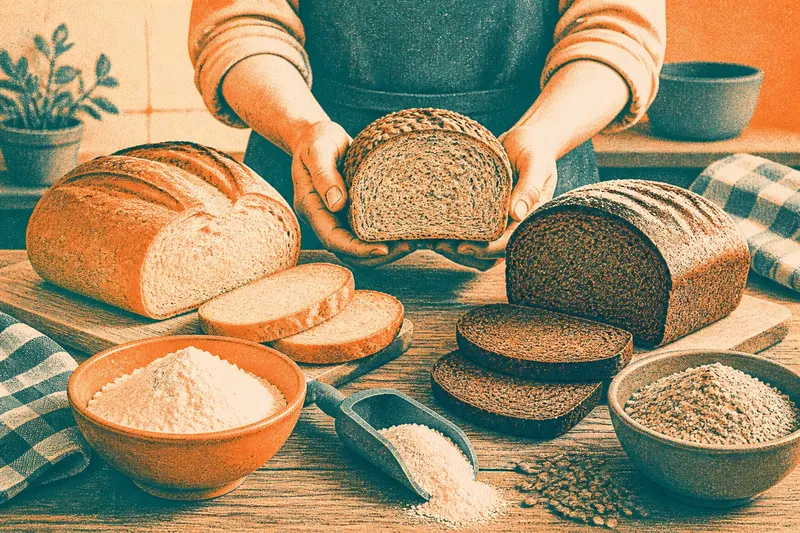
At the kitchen table, a bowl of flour can point towards two very different loaves: one light enough for a soft sandwich, another dark, fragrant and substantial beside soup. Choosing rye or wheat flour is less about which is better than what you want the bread to do. Their flavours, crumbs and handling are different, and a thoughtful blend can sit between them.
Flavour in the loaf
Wheat flour tends to bring a mild, rounded taste that leaves room for butter, jam, cheese or a savoury filling. It can be gently sweet and wheaty, especially in a loaf made with wholemeal flour, but it is rarely as assertive as rye. For a familiar everyday loaf, wheat is often the easier starting point.
Rye has a deeper, earthier flavour, sometimes with a pleasing tang. Wholemeal rye is particularly distinctive; lighter rye flour keeps more of the grain’s character than white wheat flour but is less intense than wholemeal rye. The exact flavour depends on the flour and the rest of the recipe, so the bag label is a useful guide.
Think about the food that will sit alongside the bread. A mild wheat loaf is at home with delicate toppings, while a rye-rich loaf can stand up to sharp cheese, pickled vegetables or smoked fish. Those are preferences, not rules: if you like a bold contrast, a savoury rye slice can be lovely with something sweet.
Crumb and structure
Wheat dough can usually be stretched and folded into a springy structure that traps gas as the loaf rises. The result may be open and airy or close and tender, depending on the flour, dough and shaping. Strong bread flour often gives a more resilient crumb than softer plain flour, though the pack’s intended use is the practical place to start.
Rye behaves differently. Its dough is usually stickier and less elastic, and a rye-rich loaf commonly has a closer, more compact crumb. That texture is not a flaw: it gives slices a satisfying weight and makes the bread feel at home with hearty toppings. Expect a different kind of dough rather than trying to make it behave like wheat.
In a blend, wheat can provide much of the loaf’s lift and chew while rye lends flavour and a closer texture. As the rye share rises, the loaf generally becomes denser and more pronounced in taste. If you want a soft, high-rising sandwich loaf, lean towards wheat; if you want a dark, hearty slice, give rye a larger role.
Three flour choices
Mostly wheat
Choose mostly wheat for a versatile loaf with a lighter crumb and a mild taste. It suits toast, packed lunches and bread meant to accompany a range of meals. A little wholemeal wheat can add a fuller grain flavour without changing the loaf’s character as much as a substantial addition of rye.
A wheat and rye blend
A blend suits a baker who wants rye’s aroma without giving up the springier structure of a wheat-led loaf. It is a useful middle ground for everyday slices, especially if you are still learning how a particular rye flour feels in a dough. You can adjust the balance in a later bake according to whether you want more lift or more rye character.
Mostly rye
Choose mostly rye for a distinctly flavoured loaf with a compact, moist-feeling crumb. It suits those who enjoy a substantial slice and do not mind stickier dough or less dramatic rise. If this is your first rye loaf, a familiar recipe designed for rye is a more comfortable starting point than swapping a large amount of wheat flour in an unrelated recipe.
Choose for your purpose
Start with the slice, not the flour bag. Imagine you want bread for weekday sandwiches, but also want a hint of northern rye flavour. You could choose a wheat-led recipe that already includes rye, then decide after tasting whether a more pronounced rye loaf would suit your table. The observable difference to look for is the balance you enjoy: an easier-to-handle, airier slice or a denser one with a deeper grain taste.
If toast is the priority, consider how the crumb will feel after slicing: a closer rye crumb can make a substantial piece, while a wheat-led loaf is often more yielding. For soup, a rye-rich loaf can feel robust; for delicate toppings, a lighter wheat loaf may let them speak. Think, too, about who will eat it. A strongly flavoured loaf can be a pleasure for rye lovers and an acquired taste for someone expecting a mild white loaf.
The flour itself offers further choices. White wheat flour is generally milder than wholemeal wheat; wholemeal rye is more forceful than lighter rye flour. A blend of white and wholemeal wheat can add grain character while keeping rye out of the picture, so it is worth deciding whether you want rye’s particular flavour or simply a less refined taste.
Handling and adjustments
Rye dough can feel tackier than wheat dough, so adding extra flour at the first sticky moment may make the finished loaf heavier than you intended. Use a scraper to gather dough from the bowl, and lightly wet hands if handling becomes awkward. A wheat-led dough is usually easier to shape into a neat free-form loaf; a tin can support dough that is softer or less elastic.
Make changes one at a time. If you alter the flour balance, keep the other ingredients and method familiar, then notice the dough’s feel, how the loaf rises and whether you like its crumb. Rye and wholemeal flours may absorb liquid differently from white wheat flour, so a recipe written for one flour may need adjustment; follow its guidance rather than assuming an equal-for-equal swap will behave identically.
It is not worth chasing a perfectly open, honeycombed crumb in a loaf designed to be dense with rye. The point is to get the texture you enjoy, not to make every bread resemble a wheat sourdough. A clean, sharp bread knife and a fully cooled loaf help you judge the crumb without squashing a warm slice.
Rye or wheat flour?
Which flour makes a lighter loaf?
Wheat flour is generally the better choice for a lighter, more elastic crumb. A wheat-led blend can still bring rye flavour while retaining more lift than a rye-rich loaf.
Can rye flour replace wheat flour?
Rye can replace some wheat in a suitable recipe, but the dough will usually become stickier and the crumb denser. For a loaf made mostly with rye, choose a recipe formulated for that flour rather than expecting a direct substitution to rise and handle like wheat.
What does wholemeal rye add?
Wholemeal rye gives a stronger, earthier grain taste and a more substantial feel than a mild wheat loaf. It is a natural choice when you want the flour itself to be a prominent part of the eating experience.
Which blend is best for a first rye loaf?
A wheat-led recipe containing some rye is a gentle introduction if you want familiar handling with a noticeable change in flavour. If you already know you enjoy dense, assertive bread, a recipe built around rye may suit you better.
Let the loaf decide
Choosing rye or wheat flour becomes straightforward when you picture the finished slice. Wheat favours mildness, spring and versatility; rye brings earthier flavour and a closer crumb; a blend lets you set the balance between them. For a loaf you want to eat every day, begin with the texture and flavour you prefer, then choose the flour balance that points in that direction.
Keep a brief note of the flour names and proportions you enjoy, especially if you buy different rye flours from one bake to the next. That small kitchen habit makes it easier to repeat a favourite blend or steer the next loaf towards a darker, lighter, softer or more robust slice.