A Late-Autumn Pantry Supper, Built Around What Is Open
Plan a late-autumn pantry supper around one open ingredient, a crisp or creamy contrast and a flexible menu that makes useful food of what is on hand.
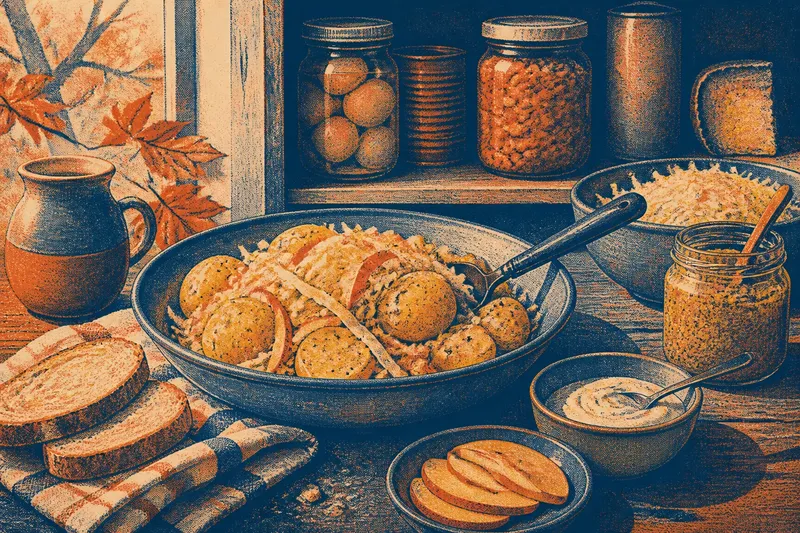
You open the cupboard for something warming and spot a half-used jar of mustard beside a tin of beans. A late-autumn pantry supper can start right there: choose one open item, give it a contrasting texture, then add only what makes the meal feel complete.
This approach suits the season’s uneven larder. There may be a few potatoes, a last apple, a heel of cheese or a jar of pickles, but not enough of any one thing to dictate a recipe. Let the open item set the direction, while the rest of supper stays adaptable.
Choose the open item
Begin with something that needs using, rather than shopping for a fixed dish. Check the fridge door, the open shelves and any container already set out for supper. Look for an ingredient that can contribute flavour, substance or a useful finishing touch.
- A jar of mustard can sharpen beans, potatoes or a dressing.
- Cooked beetroot can bring sweetness and colour to a plate of cheese and bread.
- A tin of fish can anchor a warm potato dish or a simple salad.
- Sour cream or plain yoghurt can soften a spicy or salty main ingredient.
- A handful of cooked lentils can stretch a bowl of roasted vegetables into supper.
Choose one as the centre of the meal, not all of them. Check the package or container before using food whose condition is uncertain; follow the label and the maker’s storage advice. If the item is no longer suitable, set it aside and choose another open ingredient.
Now decide what role it can play. A small amount of mustard is a seasoning, not a main course; a tin of beans or fish can carry more of the meal. This simple distinction keeps you from building supper around an ingredient that cannot do the job you need.
Add a texture contrast
Late-autumn food can easily become a row of soft, warm things. Give the central ingredient a different texture: crisp, chewy, creamy or juicy. The contrast can come from a small addition rather than a second elaborate dish.
For a soft bowl of beans, try toasted bread, crisp cabbage or sliced apple. For firm roasted root vegetables, add a spoonful of yoghurt or a soft-boiled egg. If the main ingredient is already rich, a sharp pickle or a crunchy salad leaf can keep the plate from feeling heavy.
Use what is already there. A stale loaf can become toast or croutons; a carrot can be shaved into ribbons; nuts or seeds can be scattered over a bowl if they are on hand. You do not need to make a separate side simply to create contrast.
What is not worth the effort is peeling, chopping and cooking several extra ingredients just to make a humble supper look complete. One contrasting texture, chosen with care, often does more than a crowded plate.
Build the loose menu
Think in three parts: the open item, the texture contrast and a filling base. The base might be bread, potatoes, cooked grains or a pot of soup. Add a fresh or sharp accent only if the plate needs it, such as a little apple, pickled onion, lemon or chopped herbs.
Imagine you have half a jar of mustard, a few potatoes and a small piece of cabbage. You could warm the potatoes, stir mustard into a little oil and vinegar for a dressing, then add finely sliced cabbage for crunch. The expected result is a filling warm salad with a crisp edge; if the cabbage is gone, use a sliced apple or serve the potatoes on toast instead.
Keep the menu loose by deciding what can change before you start cooking. Potatoes can give way to bread, cabbage to another crisp vegetable, and a dressing to a spoonful of yoghurt. That way, the meal has a clear shape without demanding a special shopping trip.
For a family table, serve the parts separately when preferences differ: put the warm base in one bowl, the sharp dressing in a small jug and the crunchy topping on a plate. Each person can build a supper that suits them, and delicate ingredients stay crisp until serving.
Cook in a useful order
Start with anything that takes longest or benefits from gentle heat. Put potatoes on to boil, warm beans in a small pan, or reheat soup while you prepare the contrast. Keep the cooking simple and use a pan or bowl you can serve from if that saves washing up.
While the base warms, make the finishing element. Stir mustard with oil and vinegar, slice cabbage thinly, toast bread, or spoon yoghurt into a dish with salt and chopped herbs. Taste the dressing before it reaches the main ingredient; add more acidity if it tastes flat, or a little fat if it is too sharp.
Bring everything together at the end. Toss warm potatoes with dressing while they can absorb the flavour, but keep crisp toppings aside until the plate is ready. If the meal feels dry, add a spoonful of cooking water, yoghurt or dressing; if it seems too rich, add something acidic or fresh.
What can change?
What makes a pantry supper filling?
Pair the open ingredient with a substantial base such as potatoes, bread, beans or cooked grains. If the centre is already filling, keep the base modest and use the contrast to make the plate feel varied.
How do I use a small amount?
Treat a little mustard, pickle or cheese as a seasoning or accent rather than the main portion. Spread it through a dressing, spoon it over a base, or combine it with a milder ingredient so its flavour reaches the whole meal.
What if I have no fresh vegetables?
Use whatever provides a contrasting bite: a pickle, toasted bread, nuts, seeds or a crisp apple. If none is available, vary the temperature or texture instead, such as serving a cool spoonful of yoghurt with a warm bowl.
Can the meal be made ahead?
Prepare the base and dressing ahead if that suits your evening, then keep crisp additions separate until serving. Reheat leftovers promptly and store them according to the food’s label or local guidance.
Serve without overplanning
Set the warm base on the table with the contrast and dressing beside it. Add bread if the meal needs more substance, and let diners take what they want. A bowl supper can be just as welcoming as a menu with several courses, especially on a dark evening when no one wants to wait for the last pan.
Once the plate is assembled, notice which part made the meal work: perhaps the sour dressing, the crisp cabbage or the soft potatoes. That observation gives you a useful starting point next time you plan a late-autumn pantry supper, without turning tonight’s scraps into a rigid recipe.